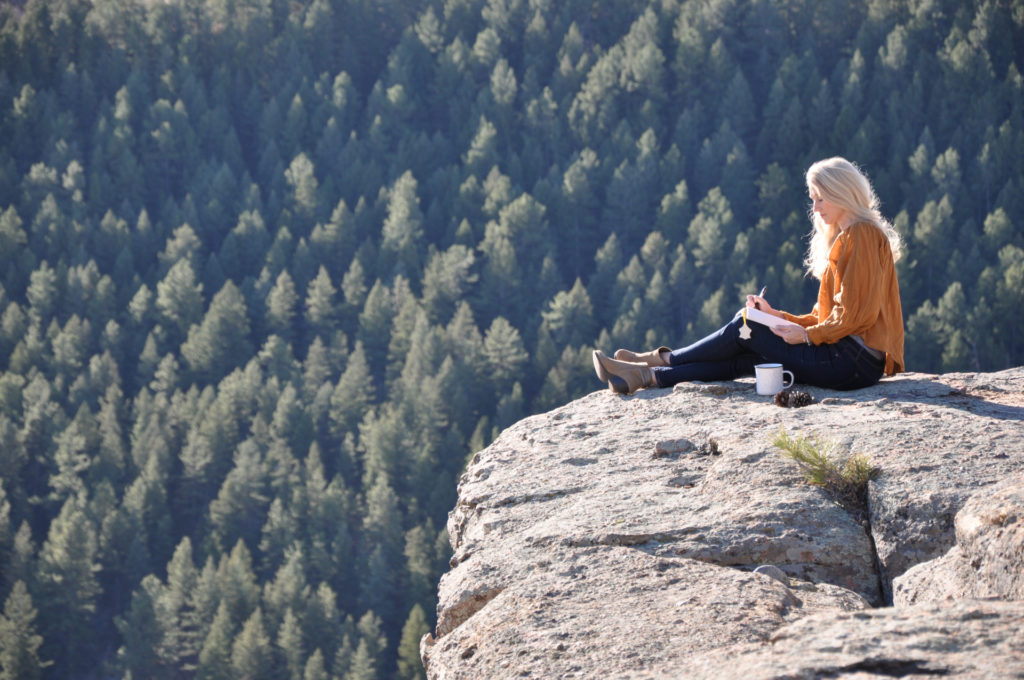
Grounding is not about escaping your life. It is about coming back to yourself inside it. — Wise Person
Every year, right around the middle of May, I start having conversations with myself about the garden. Yes, I do talk to myself, regularly!
Not calm, peaceful, poetic conversations.
More like:
Should I plant now?
Is it too early?
What if I wait too long?
What if all the good flowers are gone?
What if I plant too soon and Colorado does what Colorado does?
If you live in Colorado, you know exactly what I mean.
The garden centers are full of vibrant greenery and colorful flowers. Friends are filling planters and talking about what they’re growing this year. Everyone seems ready.
And yet, here in Colorado, the last two weeks of May can be wildly unpredictable.
We can have rain, frost, snow, hail, and sunshine that feels like July… sometimes all in one day.
So I check the forecast. Then I check it again. Then I wonder if maybe this year is different. Maybe I can plant earlier. Maybe I should risk it.
Before long, I’ve wandered away from the joy of gardening and into the weeds of overthinking.
And isn’t that how anxiety often works?
It starts with something we love.
A garden, a dream, or a new season of life.
And suddenly, instead of feeling connected and alive, we feel tense, uncertain, and strangely far away from ourselves.
When Overthinking Pulls Us Away from the Present
We spend so much of our lives indoors, surrounded by walls, screens, calendars, notifications, and expectations.
Even the blessing of four walls and a roof over our heads can sometimes separate us from nature’s gifts.
We are protected, yes.
But we can also become disconnected.
Disconnected from the weather and the season.
Disconnected from our senses and our bodies.
Disconnected from the small, steady reminders that life is still unfolding around us.
And for many of us in midlife, that disconnection can feel especially tender.
Children grow. Roles change. Bodies change. Dreams resurface. Old identities loosen. New questions rise.
What do I want this season to hold?
What have I outgrown?
What still wants to bloom?
When those questions meet the pressure to have everything figured out, we can slip into anxious planning instead of grounded presence.
That’s usually my sign.
I need to go outside.
The Garden Always Brings Me Back
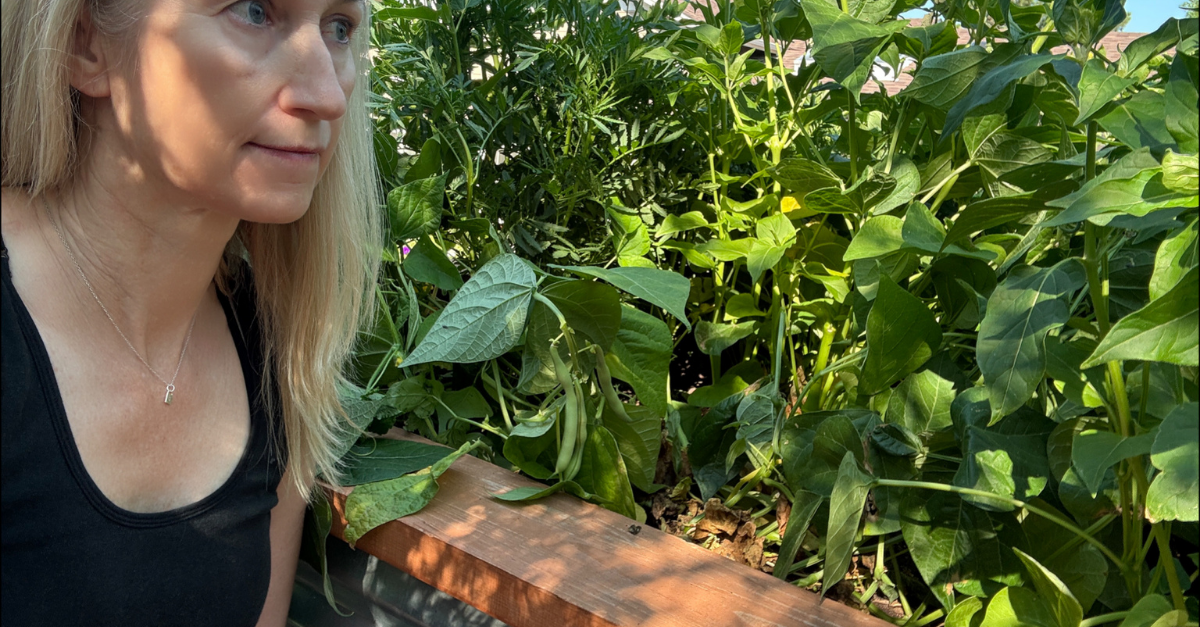
When I finally step into the garden, something in me begins to soften.
I breathe in the fresh air. I notice the green that is already there. I hear the birds celebrating spring without asking if it’s too early or too late.
They just sing.
The soil doesn’t seem rushed. The trees aren’t panicking. The tiny plants are not comparing themselves to the fully blooming baskets at the garden center.
Everything belongs to its own timing.
And when I let myself notice that, really notice it, I remember something important:
With attention and nurturing, even the smallest plants can grow.
So can we.
There have been seasons when uncertainty in the garden gave me unexpected gifts. During the pandemic, when more people began gardening, some of the familiar flowers and supplies were suddenly hard to find.
At first, I felt disappointed. Maybe even a little frustrated.
But that shortage invited me to try flowers I had never planted before. I sowed seeds I might have ignored in an easier year.
Uncertainty became its own kind of teacher.
Not because it was comfortable.
Because it asked me to loosen my grip.
That is one of the quiet lessons of the garden: we can prepare, tend, and choose with care, but we cannot control everything.
And sometimes, the very thing that interrupts our plan opens the door to something unexpectedly beautiful.
A Simple Invitation: Go Gloveless or Go Green
This week, I invite you to remove one small barrier between you and the natural world.
You don’t have to overhaul your life. You don’t have to become a master gardener. You don’t need a perfect backyard, a raised bed, or a wide-open schedule.
Just choose one simple way to reconnect.
You can go gloveless or go green.
Or, if you’re feeling extra brave and a little playful, you can do both.
Option One: Go Gloveless
Start by noticing what gets in the way of your connection with nature.
- Are you too busy to stop and smell the apple blossoms or lilacs?
- Are you rushing past the green things that are quietly returning?
- Are you ignoring the inner child in you who longs to forget about staying clean for a few minutes?
One easy way to connect with nature is to plant something.
It can be in a garden bed, a porch planter, or a little container near a sunny window.
And if you feel willing, try planting without gloves.
Let the soil touch your hands.
Let it sift between your fingers.
Notice the texture. Is it soft, dry, crumbly, cool, damp, dense?
Marvel for a moment at how those clumps of brown support and nurture the plants and trees around you.
So much life begins in what looks ordinary.
So much growth is held by what is unseen.
Then pause and ask yourself:
Who are the people in my life who support and nurture me?
Name them.
The friend who listens without fixing.
The sister who tells the truth with love.
The mentor who sees what you forget to see in yourself.
The child who reminds you to laugh.
The neighbor who shows up with soup, seedlings, or a perfectly timed text.
Who feeds your roots?
Who helps you remember your values?
Who gives you room to grow?
Touching the soil reminds us that we were never meant to grow alone.
Option Two: Go Green
If getting your hands dirty feels like too much this week, try going green.
Find a patch of grass.
Take off your shoes and socks.
Step barefoot into the green.
Close your eyes if that feels safe and comfortable.
Then notice.
- Is the grass warm or cool?
- Do the blades tickle or poke?
- Is the ground soft, damp, uneven, or firm?
- Can you smell the grass?
- Is the scent sweet, sharp, earthy, fresh?
- What images or memories rise up?
Maybe you remember running barefoot as a child. Maybe you remember summer evenings, sprinklers, cartwheels, popsicles, or lying in the yard watching clouds move across the sky.
Maybe you remember how free you used to feel before you were quite so concerned with being practical, polished, or productive.
Take it one step further — yes, pun intended.
Walk, run, or skip barefoot through the grass for 60 seconds.
Let yourself be a little silly. Let yourself be unpolished. Let yourself be someone with responsibilities and wisdom and a calendar… who still knows how to feel grass between their toes.
And whether you enjoy it or not, try not to judge the feeling.
Get curious.
That’s part of grounding too.
Not forcing yourself to feel peaceful.
Not pretending everything is fine.
Not turning nature into another assignment.
Just noticing what is true.
The 5-4-3-2-1 Grounding Practice
Regardless of the season…
When we feel anxious, overwhelmed, or disconnected, our minds often travel.
We move into the future, imagining what could go wrong.
We revisit the past, replaying what we wish we had done differently.
We try to solve ten problems at once.
But our bodies live in the present.
Our breath is happening now.
Our feet are touching the ground now.
The birds are singing now.
The soil is beneath us now.
Grounding brings us back to the physical world so we can return to the present moment.
It doesn’t erase the hard thing. But it can help us come back to ourselves.
And from that place, we often see more clearly.
At some point this week, you may feel anxious, overwhelmed, scattered, or disconnected.
Not because you’re doing anything wrong.
Because you’re human.
When that moment comes, try this simple grounding practice.
Begin by bringing awareness to your breath. Take one deep breath in. Let it out slowly.
Then move through your five senses:
5 — Acknowledge five things you can see.
A lamp. A tree branch. A blue mug. A stack of books. A shadow on the wall.
4 — Acknowledge four things you can touch.
The chair beneath you. Your hands in your lap. The fabric of your shirt. The floor under your feet.
3 — Acknowledge three things you can hear.
A bird. The hum of the refrigerator. A car passing by.
2 — Acknowledge two things you can smell.
Coffee, soap, grass, rain, laundry, or the faint scent of the room you’re in.
1 — Acknowledge one thing you can taste.
Mint from toothpaste. Tea. The last thing you ate. Nothing in particular.
There is no wrong answer.
The practice is not about performing calm.
It’s about returning.
Your Grounding Invitation This Week
So let me ask you:
What triggered feelings of anxiousness or disconnection in you this week?
Was it a decision?
A conversation?
A change in your family?
A cluttered room?
A calendar that feels too full?
A dream that keeps tapping on your shoulder?
You don’t have to judge it.
Just notice it.
Then choose one small way to reconnect with the physical world.
Go gloveless: Plant something and let your hands touch the soil. Then name the people who nurture your roots.
Go green: Stand barefoot in the grass for 60 seconds. Notice what you feel without judging it.
Practice 5-4-3-2-1: When anxiety or overwhelm rises, use your five senses to return to the present moment.
We can pause, breathe, notice, and come back.
Then share your experience with a friend who will appreciate your brave, earthy, maybe slightly silly adventure.
Because we all need practices that bring us back.
Back to the earth.
Back to the present.
Back to ourselves.