“The Best of the Grateful Dead” was playing in my office when I noticed my feet moving beneath the desk.
I could never claim to be a Deadhead. I don’t know enough of the songs, the history, or whatever insider knowledge separates an appreciative listener from someone who followed the band from city to city. Still, I recognized more of the music than expected.
Then the titles began catching my attention.
“Sugar Magnolia.”
“Scarlet Begonias.”
“China Cat Sunflower.”
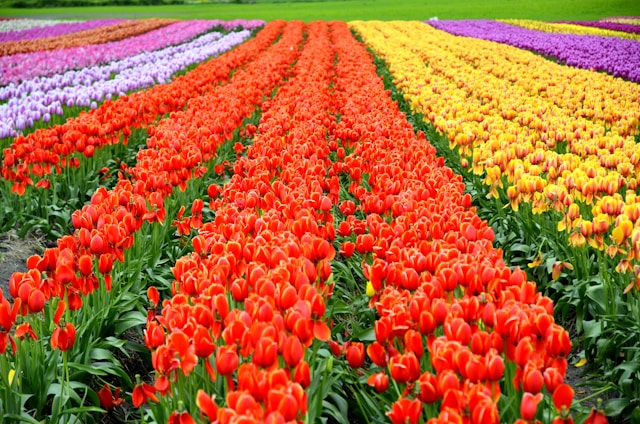
Apparently, even the Grateful Dead could not compete with the flowers already occupying my thoughts.
Earlier, I had walked through the garden and found the daylilies slumped from the July heat. Their bright June blooms had faded into papery folds, still attached to the stems but clearly past the work they had come to do.
I knew what my mother would have said.
“You need to deadhead your flowers, Kim.”
She taught me to deadhead long before I understood why it mattered. There was no formal lesson or explanation. She simply moved through the garden, summer after summer, snapping spent blooms from their stems with the same practical efficiency she brought to every other task.
Snap. Drop. Move to the next one.
When I was young, the practice seemed a little ruthless. The flowers were not dead. They were merely faded, drooping, no longer beautiful in the way they had been a week earlier. Removing them felt like giving up too soon, before they had finished whatever flowers were supposed to finish.
My mother did not appear troubled by this.
Deadheading was simply part of tending a garden. You watered. You weeded. You removed what had bloomed so the plant could direct its energy toward what came next.
I stored the lesson away with countless other things my mother showed me without explanation, trusting that understanding might arrive later.
It did.
Decades into tending my own garden, I can see that the wisdom of deadheading has very little to do with flowers.
A bloom opens, offers what it has, and reaches the natural end of that offering. Nothing has gone wrong. The plant does not interpret the fading petals as evidence that the bloom was a mistake. It stops sending its energy toward what is complete and begins directing that energy elsewhere.
New buds. Stronger roots. Another round of growth.
Plants move through this process without turning the ending into a judgment.
We rarely do.
We tend to treat releasing something as a verdict on its value. If a project ends, perhaps we chose badly. If we step away from a role, perhaps we were never committed enough. If an identity no longer fits, perhaps the years we spent living inside it were somehow false.
That fear can keep a spent bloom attached long after it has finished.
We continue the project that once felt meaningful but now feels like an obligation. We remain loyal to a role that suited an earlier version of our lives. We keep performing the identity of the accommodating woman, the capable woman, the woman who never quits, because those identities once protected us or earned us praise.
They may even have helped us build lives we genuinely value.
That is what makes them difficult to release.
An obviously wrong choice is easier to leave than something that was once deeply right. When a role gave us belonging, when a business carried a dream, or when a way of living helped us become who we needed to be, ending it can feel like betraying our own history.
We keep asking the old bloom to prove its value by continuing.
I once worked with a woman who had maintained a side business for nearly four years after it stopped being profitable or enjoyable. She had invested time, money, and care in building it. More than that, she had woven the business into her understanding of who she was.
She was someone who followed through. Someone who persevered. Someone who did not quit when things became difficult.
Closing the business therefore felt larger than closing the business. It felt like evidence against her character.
She had tried new offers, revised her marketing, reduced expenses, and changed her schedule. Each attempt required more energy and returned less of it. Still, she could not quite give herself permission to stop.
The business had bloomed once. That history mattered.
It was also finished in its current form.
Those two facts took time to stand beside each other without competing.
She did not need to declare the business a failure in order to close it. She did not need to minimize the years when it gave her purpose, income, connection, and pride. Ending it could not erase what it had already contributed to her life.
The bloom had given what it had.
When she finally closed the business, relief arrived alongside grief. She missed parts of it. She questioned herself. She also began sleeping better. Her mind became quieter. Within a few months, she found herself drawn toward work she had barely noticed while so much of her energy was occupied with keeping the old business alive.
The next thing had not been waiting in a neat package. It appeared gradually, once she had enough attention available to recognize it.
This is the part of deadheading we often overlook. Removing a faded bloom does not instantly reveal the future. The garden may look barer for a while. The open stem can feel like evidence of what is missing before it begins to feel like possibility.
There is an uncomfortable interval between release and renewal.
We may know something is complete before we know what should replace it. We may feel the old identity loosening before another feels trustworthy. We may create room without receiving immediate proof that the room was needed.
That uncertain middle can tempt us to reattach ourselves to what is familiar, even when the familiar has become draining.
The spent bloom remains visible. The new growth is still underground.
My younger self thought my mother was removing flowers because they were no longer beautiful. Now I understand that beauty was never the measure. A bloom could be appreciated fully and still be complete. Leaving it on the stem indefinitely would not honor it. It would ask the plant to keep feeding what could no longer grow.
The same is true in life.
Honoring what something meant does not require carrying it forever. A role can have shaped us and still be ready to end. A relationship can have mattered and still need a different form. A dream can have been sincere even if we no longer want the life required to pursue it.
An identity can have helped us survive one season and become too small for the next.
The ending does not rewrite the years that came before it. It simply asks us to stop pouring today’s energy into yesterday’s bloom.
I eventually went outside and deadheaded the daylilies, several weeks later than any responsible gardener would have. I would like to say I had been contemplating the emotional implications of the task. Mostly, I had been avoiding the heat.
The faded blooms came away easily.
Snap. Drop. Move to the next one.
When I finished, the bed looked quieter and more alive at the same time. The flowers that remained were easier to see. Small buds I had missed were suddenly visible along the stems.
Nothing new had appeared while I worked.
I had simply removed what was keeping me from seeing it.
Perhaps that is one way to recognize a bloom that has finished: it requires more and more of your energy while making everything still alive harder to notice.
You do not have to decide immediately what to remove. Begin by noticing where your attention continues to flow out of habit, loyalty, or fear. Name what that project, role, relationship, or version of yourself gave you while it was blooming.
Then ask a separate question:
What in me is waiting for the energy this no longer needs?
The answer may not arrive all at once. New growth rarely announces itself with the confidence of a flower already open.
Sometimes it begins as a nearly invisible bud.
Sometimes the music starts, and your feet begin moving beneath the desk before the rest of you understands why.
Keep tending,