The harvest we miss when we have already decided what “on time” means.
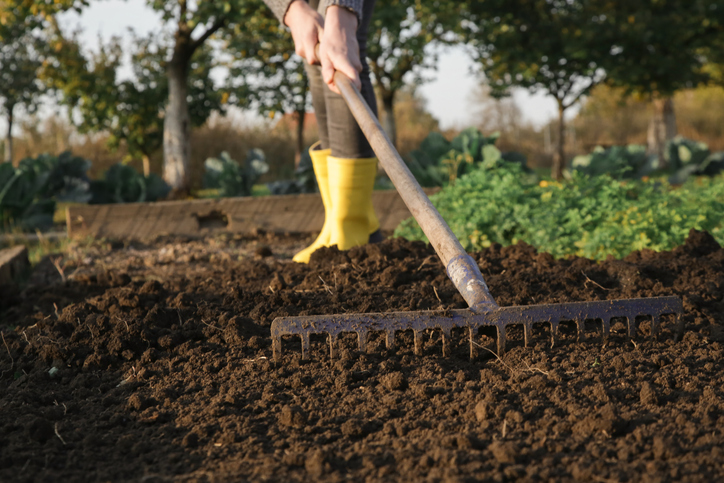
I went into the garden early enough that the sun was only beginning to clear the bushes. It came through in narrow patches, illuminating one section of the bed while leaving another in shadow, as if the garden were slowly turning on its own lights.
I wasn’t looking for anything to add to dinner. I wanted to see what needed water and what needed to be pulled. The morning glories had once again taken the liberty of planting themselves, and while I admire their optimism, I do not entirely trust their intentions. Left alone, they wind themselves around the tomatoes and cucumbers, climb whatever is nearest, and spread with the confidence of something that has never considered whether it was invited.
The marigolds were flourishing too. Some grew where I wanted them to. Others had become large enough that I was beginning to wonder whether their cheerful orange abundance was taking water from the vegetables I had planted on purpose.
This was how I had moved through the garden lately: checking moisture, pulling weeds, redirecting vines, calculating which plant might be crowding out another. I was tending to it. Faithfully, even. But almost everything I noticed belonged to one of two categories: what needed attention now and what I hoped would happen later.
Then the sun reached the beans.
A few long green pods appeared beneath the leaves, made suddenly obvious by the light. I leaned closer and found more, then more beyond those. Once I began lifting the leaves, they seemed to be everywhere, hanging in clusters I had somehow missed while standing inches away.
The cucumbers had been equally busy. I found ten of them, hidden beneath broad leaves and tucked along the edges of the bed. Between the cucumbers and the beans, there was enough food for several meals. Time to phone a cucumber-loving friend.
My first response was delight, the uncomplicated pleasure of discovering that something you planted has done what you hoped it would do. The seeds had germinated. The blossoms had become bean-lets, and the bean-lets had become actual beans, quietly, while I was occupied with weeds and water.
My second response was irritation with myself.
Some of the beans had grown too large. I knew what they would be like before cooking them: tough skins, woody texture, large seeds inside that would be mealy rather than tender. I had eaten enough overgrown beans to recognize the evidence.
Green beans are one of my favorite veggies from the garden, partly because they remind me of my parents’ garden in Wisconsin and partly because their season is brief. In Colorado, we get one real attempt each year. I wait through spring, watch the first leaves emerge, look for blossoms, and anticipate the few weeks when I can walk outside before dinner and bring part of it in with me.
Now some of that harvest had passed its best while I was standing nearby looking for problems.
The regret felt larger than a handful of woody beans warranted. It was not only that food had gone to waste. I had waited for this. I had planted the seeds, watered them, protected them from competing vines, and looked forward to fresh green beans. Yet when the thing I wanted arrived, I nearly missed it because I was still operating according to an old schedule.
In previous years, the beans had come later in the summer. That expectation settled into me so thoroughly that I stopped treating it as an estimate. It became a fact. I knew the harvest would come, but I had already decided what “on time” meant.
The weather did not consult my calendar. Neither, apparently, had God.
We had experienced an unusually warm stretch. The soil warmed sooner and the plants grew faster. Had I paid closer attention to the blossoms, I might have noticed the first tiny beans forming beneath them and begun checking earlier. Instead, I glanced at what was easily visible and assumed the surface represented the whole story. There were blossoms, so I believed the beans were still becoming.
I did not lift the leaves.
Inattentiveness can look remarkably similar to responsibility. Watering, weeding, and watching for anything that might interfere with the future harvest made a convincing account of everything I was doing to support the garden. What I had stopped doing was looking closely at what all that tending had already produced.
I recognize the habit beyond the garden. I have a picture of what meaningful work will look like when it has fully arrived. The picture is not entirely unreasonable. It contains readers, conversations, invitations, clients, clearer language, and a body of work that feels unmistakably my own. It is large enough to organize effort around and distant enough to keep me moving.
It can also make everything short of its completion feel provisional.
Someone responds to one of my essays and I appreciate it, but part of me files the response beneath the larger question of whether enough people are reading. An invitation arrives and I am grateful, but I quickly begin evaluating whether it leads where I hope to go. My work becomes clearer, one sentence at a time, while I continue waiting for the day I will feel entitled to declare it clear.
I am not dismissing these things exactly. I am simply reluctant to call them a harvest.
Harvest, in my imagination, belongs to the end. It is the full basket, the visible result, the outcome no one could mistake for something smaller. It is large enough to withstand external judgment and obvious enough that someone else might recognize the success I am reluctant to recognize for myself.
Until then, there is more tending to do.
This is one of the quieter agreements I have made with achievement: I may feel successful when the outcome is complete and visible to someone besides me. Before that, I may feel encouraged. I may acknowledge progress. I may even believe I am headed in the right direction. But I should not rest too comfortably in any of it. Enjoying an early success might dull my ambition or persuade me to settle for less.
The belief sounds almost responsible. It keeps the weeds pulled.
It also leaves beans growing woody beneath the leaves.
An early harvest does not have to distract me from the larger vision. It may be evidence that the vision no longer exists entirely in the future.
That does not mean every encouraging commentor will become a subscriber, or every invitation will become the opportunity I once imagined. A handful of beans is not the entire season. Some blossoms will fail. Some vines will produce less than I hoped. Morning glories will continue volunteering for positions I did not open.
Still, insisting that only the ultimate outcome counts creates its own kind of dishonesty. It asks me to ignore what is true now because it is not yet the entire truth.
People are responding to my work. The work itself is becoming clearer. I am more connected to my own voice than I was a year ago. The person doing this work feels less constructed and more familiar. None of that completes the vision, but neither is it merely preparation for a life or body of work that has not begun.
Some of the harvest is already here.
The garden also reminded me that I did not create the conditions alone. I planted and watered. I pulled competing growth and adjusted when the soil became dry. Then warmer weather arrived — unplanned, unearned, beyond my control — and accelerated everything.
There is a kind of grace in that. Not grace as a reward for getting everything right, but grace as the part of the harvest I could neither manufacture nor schedule.
I can take responsibility for tending without pretending I control the season.
Perhaps that was another reason the early harvest unsettled me. It exposed the limits of my authorship. The beans were not simply the result of my plan executed correctly. They emerged from a collaboration among seed, soil, weather, water, attention, and whatever mystery turns a blossom into food while I am busy elsewhere.
I had done good work. I had also received help.
Striving for more keeps my eyes on the result I intend to produce. Striving for truth asks me to notice what is actually here, including the parts I did not schedule, cannot fully claim, and may have been given rather than earned.
That morning, the truth was hanging beneath the leaves.
Some of it was tender and ready. Some of it had waited too long. Both required me to stop treating the surface as the whole story.
I gathered what I could use and left the garden with more than I had expected to find. The larger harvest is still ahead, I think. There are blossoms on the vines and smaller beans forming behind them. The season is not finished.
But neither is it merely beginning.
The next morning, while the light was just reaching the garden, I checked the soil and pulled a few weeds. I unwound a morning glory from the tomato plant it had mistaken for a ladder.
Then I lifted the leaves.
Keep tending,